Many indie authors spend years building their mailing list one subscriber at a time. A reader magnet here, a social media post there, the occasional paid promotion. It works, but it is slow. Building a list of 1,000 engaged subscribers through organic methods alone can take the better part of a year.
Group promos offer a different path. Instead of growing your list subscriber by subscriber, you grow it reader by reader alongside other authors in your genre, each of you sharing the promotional load and sharing the reward. For many indie authors, a single well-organized group promotion delivers more mailing list growth in two weeks than multiple months of solo effort.
This guide covers everything you need to know: how group promos work, which types exist, what you need before joining your first one, how to find quality promos, how to eventually run your own, and how to avoid the mistakes that waste time and attract the wrong subscribers. If you are serious about building a mailing list that drives real reader engagement, group promos belong in your strategy.
What is a Group Promo?
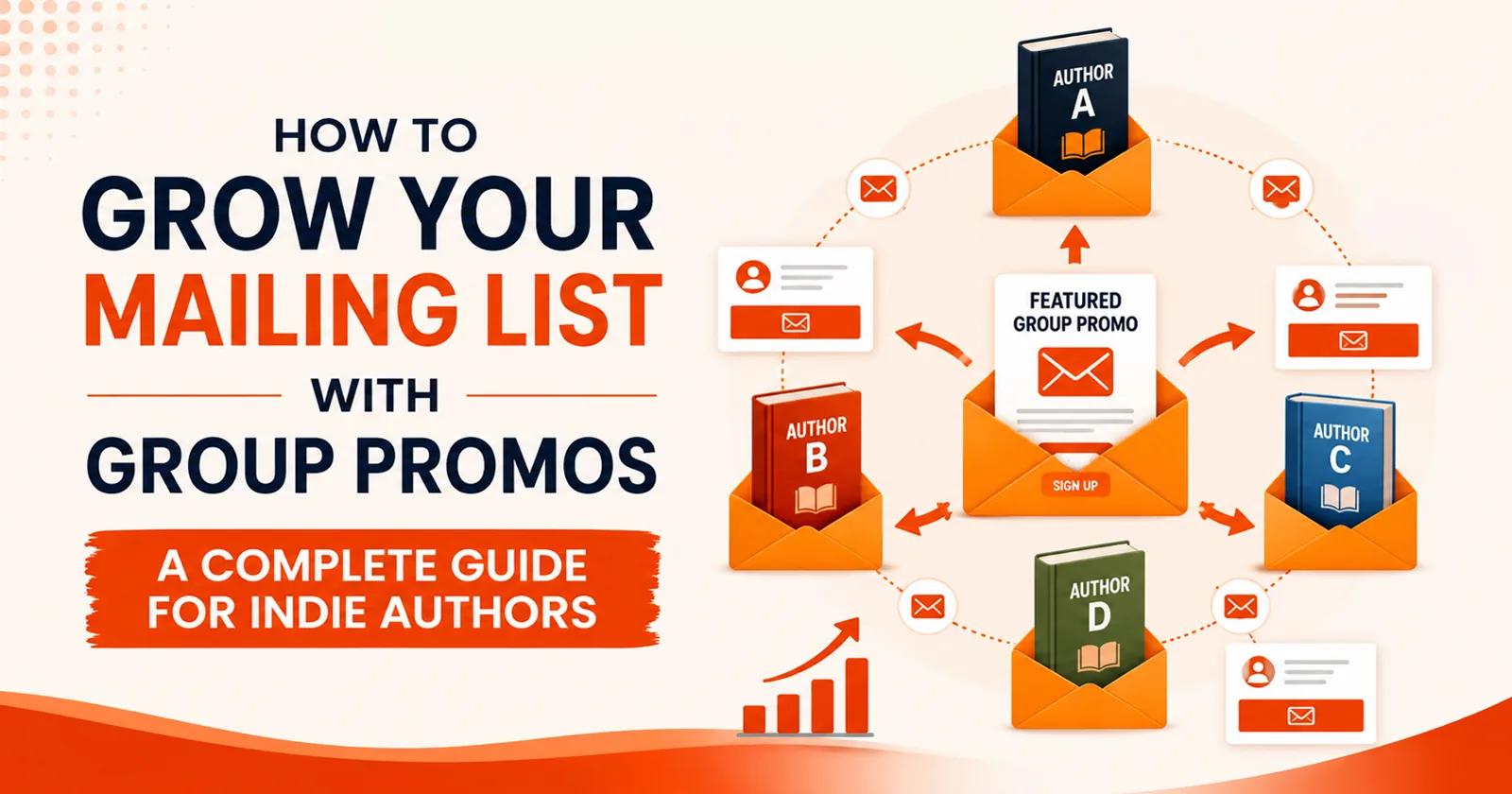
A group promo is a coordinated cross-promotion in which multiple authors and publishers work together to promote their books to each other's audiences through a shared promotional event.
The format varies depending on the goal. Group promos can be used to promote paid books during a discount sale, to run free first-in-series campaigns, or to distribute free reader magnets as a list-building tool. The mechanics shift depending on purpose, but the core principle is the same: authors pool their promotional reach to achieve together what none of them could achieve alone.
In this guide, we focus specifically on reader magnet group promos, which is the format most commonly used for mailing list growth. In this group promo type:
Each participating author contributes a free book, usually a dedicated reader magnet or a free first-in-series title.
All contributing books are displayed together on a shared landing page, typically for a specific genre or theme.
Readers browse the page, choose the books they want, and claim them by providing their email address to each individual author.
Each email address goes directly into that author's mailing list, not into a shared central pool
The result is straightforward: readers discover new authors and get free books they actually want, while each participating author gains new subscribers who have already shown interest in their genre.
Group promos organized around paid book sales and discount events serve a different purpose and operate under different rules. Those formats are not covered here. For the rest of this guide, "group promo" refers to the reader magnet format focused on mailing list growth.
In short: A group promo brings multiple authors and their audiences together around a shared landing page. Readers opt in, authors gain subscribers. Everyone contributes, everyone benefits.
Group Promos vs. Book Swaps: What is the Difference?
If you are also familiar with book swaps, it is worth clarifying the difference, because the two terms are sometimes incorrectly used interchangeably.
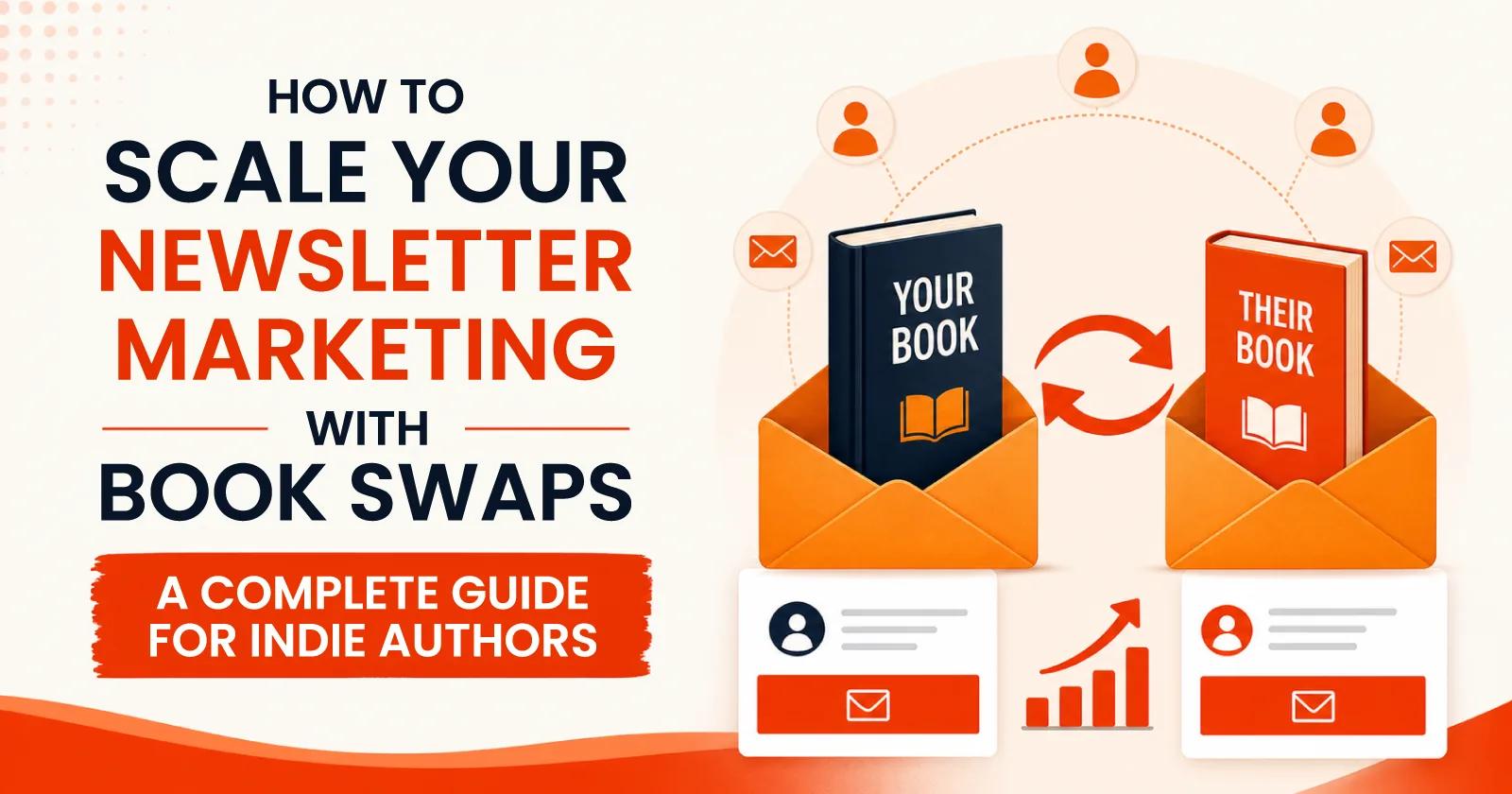
A book swap is a one-to-one arrangement between two authors: each promotes the other's book directly to their own newsletter subscribers. Book swaps are typically done with paid titles and the goal is to drive sales. Each author sends one promotional email to their list, and both benefit from exposure to the other's audience. For a deeper look at how book swaps work, see our complete guide to newsletter swaps.
A group promo involves multiple authors, one shared landing page, and a reader opt-in step. The goal is mailing list growth. Readers visit the landing page, choose books they want, and subscribe to individual authors' lists in exchange for the free book.
The two tools serve different purposes, but they work well in combination. Book swaps help you sell more paid books to existing audiences. Group promos help you build those audiences in the first place. Many successful indie authors run both: group promos to consistently add new subscribers, and book swaps to convert those subscribers into buyers over time.
Types of Group Promos
All reader magnet group promos follow the same core mechanic: participating authors contribute a free book to a shared landing page, and readers opt in to each individual author's mailing list to claim the books they want. What varies is how the promo is organized and what ties the contributing books together. The most common organizing principles are:
Genre spotlight promos
This is the most common type of group promo by far, and the one that makes the most intuitive sense for mailing list growth. All contributing books belong to the same genre or subgenre, without requiring a more specific theme or concept. Examples are romance, thriller, or science fiction, or also one level deeper like paranormal romance or cozy mystery. Readers browsing a genre spotlight promo already know they enjoy that type of book, which makes them naturally well-matched subscribers for every author on the page. For authors new to group promos, genre spotlight promos are the obvious starting point.
Themed promos
More specific than a genre spotlight, themed promos are organized around a shared trope, or narrative concept. "Second chance romance," "small town cozy mysteries," and "space opera adventures" are all examples. The narrower focus attracts readers with a precise set of interests, which tends to produce more targeted subscribers. Themed promos work especially well for authors writing in popular subgenres where readers self-identify strongly with specific tropes.
Seasonal promos
These are timed around holidays, seasons, or calendar events. Valentine's Day romance promos, summer thriller reads, and holiday cozy mystery collections are popular formats. Seasonality adds a natural hook for promotion: readers are already in a particular reading mood, and participants have a genuine reason to promote with enthusiasm. The main constraint is that seasonal promos require advance planning to hit the right window effectively.
Free first-in-series promos
Instead of a standalone reader magnet, the author offers the first book in a paid series for free during the promo period in this type of promo. Readers who claim a first-in-series book and enjoy it are likely to continue into the rest of the series, making them particularly valuable subscribers from the start. One important note: if your first-in-series title is enrolled in Kindle Unlimited, it cannot be distributed through a group promo landing page. KU exclusivity requires the book to remain available through Amazon only, and distributing it elsewhere through a promo would violate those terms. Free first-in-series promos are best suited to authors publishing wide.
Why Group Promos Are One of the Fastest Ways to Grow a Mailing List
The core mechanic that makes group promos so powerful is the network effect. Each participating author brings their existing audience to the promotion. A promo with twenty authors, each with a list of 1,000 subscribers, reaches a potential combined audience of 20,000 readers. No single author in that group could reach 20,000 genre-matched readers on their own without significant time or budget.
Compare that to the alternatives:
Paid advertising
Facebook and Amazon ads can grow a mailing list efficiently, but costs accumulate quickly. Growing a mailing list through paid advertising typically costs between $0.50 and $1.00 per new subscriber. A goal of 500 new subscribers means spending $250 to $500, with limited guarantee of subscriber quality or genre fit.
Organic social media
Posting consistently on Instagram, TikTok, or Facebook can attract readers over time, but the timeline is long and the conversion from follower to subscriber is low. Social media visibility also depends heavily on algorithm reach, which shifts unpredictably.
Solo reader magnet promotion
Publishing a reader magnet and promoting it independently builds your list gradually, but you are limited to your existing reach. Growth is linear rather than compounding.
Group promos sidestep all of these limitations. The cost is zero beyond platform cost, and the time spent creating your reader magnet and promoting the shared landing page to your own list. The traffic is genre-specific because the promo is built around a shared audience of readers who already read books like yours. And the results compound: the more actively each participant promotes, the more every participant benefits.
The economics: Zero ad spend. Genre-targeted traffic. Shared promotional effort. For most indie authors, it is one of the highest-return activities in their marketing mix.
What You Need Before Joining Your First Group Promo
Joining a group promo before you have the right foundations in place is a missed opportunity. These three elements should be ready before you submit your first application.
A strong reader magnet, with the right cover
Your reader magnet is the free book you contribute to the promo. It needs to be compelling enough for a browsing reader to choose it over the other books on the same landing page.
Genre fit matters most. Your reader magnet should feel unmistakably like the kind of book your ideal reader already loves. But in a group promo context, one element of your reader magnet carries more weight than in almost any other marketing situation: the cover.
On a group promo landing page, your book competes for attention based almost entirely on its cover. A reader scanning a page of twenty or thirty books makes split-second decisions about which ones to claim. A professional, highly on-genre cover is arguably more important for group promos than for any other marketing format. A generic or off-genre cover will be skipped, regardless of how good the writing inside it is. If your reader magnet cover was not designed by a professional cover designer with strong knowledge of your genre's visual conventions, addressing that before joining any promo is worth prioritizing. The cover is not just packaging. In this context, it is your entire first impression.
Once a reader has claimed your book, the story itself takes over. Your reader magnet should give readers a clear and honest sense of who you are as an author: the tone you write in, the genre conventions you follow, and the kind of reading experience they can expect from your paid work. A reader who finishes your magnet and immediately wants more is exactly the subscriber worth building a list for.
The simplest format is a standalone short story set in your genre. It requires no existing series and works for authors at any stage of their career.
A tactic widely used by experienced indie authors is to make the reader magnet a prequel to a series they are actively selling on paid platforms. A prequel introduces the world, the tone, and often the key characters the reader will encounter in the paid books. When done well, it does not feel like a promotional sample. It feels like a gift that happens to leave the reader wanting the next book. That is a meaningful advantage: a subscriber who has already fallen in love with your world and your characters is far more likely to buy the series than one who simply claimed a free standalone and moved on.
An email service provider
The platform hosting the group promo (BookFunnel, StoryOrigin, BookSparker, or whichever platform the organizer uses) handles the delivery of your reader magnet directly to each reader who claims it. You do not need an email service provider to deliver the book itself.
What you do need an email service provider for is managing your subscriber list and sending your newsletters. Most group promo platforms offer direct integration with the major providers: MailerLite, Kit, and Mailchimp are all widely supported. When this integration is active, every reader who claims your book is automatically added to your mailing list without any manual steps from you. Without the integration, new subscribers are collected by the platform and you would need to export and import them manually, which is workable but inefficient if you are running promos regularly.
Setting up and testing the integration before the promo runs is worth treating as a required step, not an optional one.
A welcome sequence
Once a new subscriber lands on your mailing list, either automatically via the platform integration or through a manual import, they need to hear from you promptly. A welcome sequence of three to five emails, introducing you as an author and setting clear expectations for future newsletters, significantly improves the engagement rate of promo subscribers. Without one, many readers will forget they signed up by the time your next regular newsletter arrives. A well-crafted welcome sequence is the bridge between a reader who claimed your free book and one who becomes a long-term, engaged subscriber. It is not optional if converting promo subscribers into real readers is the goal.
How to Find Group Promos and Evaluate Them Before Committing
Once your foundations are in place, the next step is finding promos worth joining.
Where to find group promos
BookSparker is a platform built specifically for newsletter cross-promotions, including group promos. Authors can join existing promos or organize their own across a wide range of genres, all within an intuitive, easy-to-use platform that provides advanced statistics and detailed settings for each promotion. One particularly useful feature for authors managing multiple promotional activities is BookSparker's built-in “Outgoing Calendar”, which displays all your upcoming commitments regarding swaps and group promos in a single organized view, so no deadline or send date gets missed.
BookFunnel organizes group promos across many genres and allows authors to browse available promos by genre and timing. It is a widely used platform in the indie author community for both promo organization and e-book delivery.
StoryOrigin similarly hosts group promos and gives authors access to a marketplace of available promotions organized by genre. StoryOrigin also provides engagement analytics on participating authors, which helps you evaluate the promotional reach of a promo before committing.
It is also worth joining genre-specific author Facebook groups, where organizers frequently post open calls for participants. Many promos are coordinated informally through community groups before being hosted on a platform. Using multiple platforms broadens your access to available promos and helps you build a wider network of reliable partners over time.
How to evaluate a promo before joining
Not every promo is worth your time. Before committing, consider:
Genre alignment: The promo's genre and theme should match your book closely. A mismatch produces subscribers who are not genuinely interested in your work.
Promo size and curation: Very large promos (100 or more books) can overwhelm readers and reduce the average number of books each reader claims. Smaller, well-curated promos often produce higher-quality subscribers per participant.
Promotion requirements: Understand what you are committing to before you agree. Some promos require a specific send date, a minimum list size, or a particular promotional format.
Organizer track record: Has this organizer run successful promos before? Other authors in your network can often speak to a particular organizer's reliability and attention to detail.
Your Role as a Participant: How to Promote Effectively
Joining a group promo is not passive. Every author who participates has a responsibility to actively promote the shared landing page. The results you get, and the results every other participant gets, are directly tied to how seriously each author takes that responsibility.
What participation typically requires
Most group promos ask each author to send at least one newsletter to their mailing list featuring the promo landing page, usually on a specific date or within a short date range. Some promos additionally require each author to share the landing page on their social media channels.
How to promote effectively
A brief, genuine endorsement of the promo in your newsletter performs significantly better than a copied template. Readers respond to your voice. A sentence or two about why you're participating and what kind of books are in the promo, followed by the landing page link, is usually enough to drive strong click-through.
For social media, multiple posts across the promo period outperform a single post on day one. Short posts featuring your reader magnet cover and the landing page link are easy to create and easy for followers to share.
Why it matters beyond your own results
When you promote effectively, you are not just growing your own list. You are contributing to the results of every other author in the promo. Authors who take their promotion commitments seriously build a reputation as reliable partners, which opens doors to better, larger, and more curated promos or swaps over time. Authors who promote minimally tend to find themselves quietly excluded from the higher-quality events.
Hosting Your Own Group Promo
Participating in promos organized by others is the right starting point. Once you have been through the process a few times and understand the mechanics, organizing your own promo becomes worth considering.
When to start hosting
Most authors are ready to host after participating in five to ten promos as a contributor. By that point, you understand the process, you have a small network of authors you have worked with before, and you have a sense of what distinguishes a well-run promo from a poorly managed one.
The organizer's responsibilities
As an organizer, you recruit participating authors, vet their submissions for genre fit and cover quality, build or manage the shared landing page, coordinate promotion dates, and communicate expectations clearly to all participants. It requires more effort than participating, but the rewards are proportional.
The host's advantage on the landing page
Organizers typically have the option to feature their own book at the top of the landing page, giving it more visibility than books positioned further down. Since readers generally begin browsing from the top, the first position receives more attention than those below it. It is a meaningful benefit and one of the practical rewards of taking on the organizational work. It does not guarantee dramatically more downloads than a mid-page position, but it consistently delivers above-average visibility for the organizer's title.
Building your hosting reputation
Well-run promos attract better participants. The quality of the organizer directly influences the quality of the authors willing to join. Running promos professionally builds a reputation that pays dividends across every event you organize in the future.
The Subscriber Quality Problem
One of the honest realities of group promos is that not every new subscriber becomes an engaged reader. This is worth addressing directly rather than discovering it after your first promo leaves you with 300 new subscribers and a noticeably lower open rate.
The freebie seeker phenomenon
Some readers participate in group promos primarily to collect free books. They join every author's list to claim a download, but have no strong intention of staying engaged. These readers tend to have low open rates, rarely click links, and often unsubscribe within a few weeks of joining. They are common enough in the indie author community to have their own informal name: freebie seekers.
How to minimize low-quality subscribers
The best defense is a well-targeted promo. Promos with a precise genre or theme filter attract readers who are genuinely interested in that specific type of book. The more specific the promo, the more motivated the subscribers it tends to produce.
A strong welcome sequence also makes a significant difference. Readers who receive an immediate, warm, and engaging welcome email from you are far more likely to stay subscribed and open future emails. A welcome sequence that sets clear expectations and delivers immediate value signals to the reader that your newsletter is worth keeping.
How to measure subscriber quality after a promo
Track the open rate and click rate on your first three welcome emails for each new promo cohort. If your open rate is significantly lower than your list average, the promo's targeting was too broad. If it is close to your average, the promo delivered genuinely interested readers. Over time, this tracking tells you which types of promos, which organizers, and which platforms consistently deliver the best subscriber quality for your genre.
A Common Concern: Are We Just Sharing Subscribers?
A concern that comes up regularly among authors considering their first group promo is worth addressing directly. When the participating authors share the group promo landing page to their mailing lists, are they not simply redistributing their subscribers among each other, rather than reaching genuinely new audiences?
This is a fair concern, and it is partially accurate. In a group promo organized around a specific genre, dedicated readers in that genre often already follow several of the participating authors. Some of the subscribers you gain through a promo will have been on other participants' lists for years.
But this overlap is not a problem. For authors who use book swaps alongside group promos, it is actually one of the more useful dynamics at play.
Think about what happens when you launch a new paid book and arrange newsletter swaps with several authors in your genre. A reader who is only on your own list will see your book once or maybe twice, in your own newsletter. But a reader who is also subscribed to some of the authors you are swapping with will see your new book featured multiple times. Apart from your own newsletter, they will see your book in each of these authors’ newsletters. The more genre-aligned authors a reader follows, the more frequently your new paid book appears in their inbox. That is not a problem caused by subscriber overlap. It is the direct benefit of it. Each of these additional appearances builds the familiarity that eventually converts a reader into a buyer.
The takeaway: Subscriber overlap in group promos is not a problem. When you combine group promos with book swaps, readers who follow multiple authors in your genre will encounter your paid books repeatedly across swap newsletters. Far from diluting your reach, the overlap is what makes that repeated exposure possible.
Common Mistakes to Avoid
Joining promos outside your genre
The most common mistake and the costliest. Genre mismatch produces subscribers who were never genuinely interested in your work. They inflate your list count and deflate your open rates. Every promo you join should feel like it was designed for exactly the readers who would love your books.
Promoting half-heartedly
Sending a perfunctory one-line mention at the end of an unrelated newsletter is not effective promotion. It reduces the number of clicks the shared landing page receives from your list, which reduces the results for every participating author. It also quietly damages your reputation as a promo partner in a community where that reputation travels fast.
Skipping the welcome sequence
Promo subscribers who do not hear from you within the first 24 to 48 hours after claiming your book are likely to forget they subscribed. A welcome sequence is not optional if you want promo subscribers to become long-term readers. Set it up before the promo runs, not after.
Joining too many promos in a short window
Participating in promos too frequently creates two problems. Your own list experiences promotional fatigue if you ask them to click on a promo landing page too often. And a sudden spike in email volume from your domain can trigger deliverability issues. Two to three promos per month is a sustainable rhythm for most authors.
Not tracking results
Without tracking which promos produced which results, you have no basis for deciding which ones to repeat. At minimum, monitor the open and click rates on your welcome sequence for each new promo cohort. Over several months, clear patterns emerge about which platforms, organizers, and promo types deliver the best subscribers for your particular audience.
Running Group Promos at Scale
For authors who want to make mailing list growth a consistent, systematic part of their publishing business, group promos can be run on a regular cadence rather than as occasional experiments.
A sustainable rhythm for most indie authors is two to three group promos per month. More than that begins to stress your own list and requires more time for vetting and preparation than most authors can consistently maintain alongside their writing schedule.
The authors who see compounding results from group promos tend to approach them in a few consistent ways:
They build a reliable network of promo partners
After a few promos, patterns emerge. Certain organizers run consistently high-quality promos. Certain participating authors promote reliably and deliver strong results. Authors who show up consistently in a group promo, with good results, tend to bring the same commitment to book swaps, making them worth reaching out to as swap partners as well. Staying connected with those authors and prioritizing their future promos is a straightforward way to improve your average results over time without spending more effort.
They track every promo
Rather than tracking results manually, choosing a platform that provides built-in promo analytics makes this straightforward. BookSparker, for example, gives you clear performance data for every promo you participate in, including new subscribers gained and engagement metrics. Over six months, those patterns become clear enough to meaningfully influence which promos you join and which you pass on.
They treat it as a system, not a one-off
Authors who approach group promos with the same regularity they bring to their writing schedule find that mailing list growth stops feeling like an uphill task and starts behaving like a predictable system. That shift, from occasional effort to consistent process, is what separates authors with steadily growing lists from those who see spikes followed by flatlines.
Conclusion
Group promos offer indie authors something relatively rare in book marketing: a genuinely effective list-building strategy that costs time rather than money, delivers genre-matched readers rather than cold traffic, and grows more efficient as you build your network and sharpen your judgment over time.
The barrier to entry is low. You need a professional reader magnet with a strong on-genre cover, an email service provider connected to your promo platform, and a welcome sequence ready to go. With those three elements set up, your first promo is within reach. After that, the compounding begins.
Authors who use group promos consistently, evaluate their results honestly, and invest in building relationships with reliable organizers and participants find that mailing list growth stops feeling like a grind. It becomes a system. That is a shift worth working toward.
This guide is published by BookSparker, a platform built for indie authors to organize book swaps and group promos.